Cart (0)
Your cart is empty


Menstrual flow is the monthly bleeding (your period) in women of reproductive age.
It is made up of blood, uterine tissue, and vaginal secretions; the average volume of menstrual flow is 30 to 80 ml per cycle.
This natural process is an indicator of reproductive health and its intensity can vary from person to person.

A light menstrual flow is characterized by low blood loss during the menstrual cycle and a fairly short duration (2 to 4 days).
Blood loss per cycle: less than 30 ml
A moderate menstrual flow is characterized by average blood loss during the menstrual cycle and sometimes by blood clots.
Blood loss per cycle: between 30 ml and 50 ml
A heavy menstrual flow is characterized by significant blood loss during the menstrual cycle and by blood clots.
Blood loss per cycle: between 50 ml and 80 ml
Menorrhagia refers to periods with a very heavy menstrual flow and a longer duration (more than 7 days), with blood clots.
Blood loss per cycle: more than 80 ml
The Higham score is used to measure blood loss during your period.
This test is used in particular to diagnose conditions such as menorrhagia (very heavy periods), giving patients a simple way to measure how much blood they lose during their period.
It involves recording how saturated your period products (pads or tampons) are, with points assigned based on the level of saturation. It provides a more reliable assessment than subjective descriptions of flow.
The "Higham Score" is a test developed by Jenny Higham, a British academic specializing in medical education and the first woman to serve as Vice-Chancellor of St George's, University of London.

It's pretty simple. During your cycle:
👉 Please note that this calculation is based on disposable period products with regular absorbency.
Once your cycle is over, it's time to add it all up:
🩸 Less than 40 points = light flow
🩸 40 to 70 points = moderate flow
🩸 70 to 100 points = heavy flow
🩸 100 to 150 points = menorrhagia
🩸 More than 150 points = menometrorrhagia (a combination of menorrhagia and metrorrhagia)
If you have irregular cycles, do the calculation over 3 months for a more representative score.
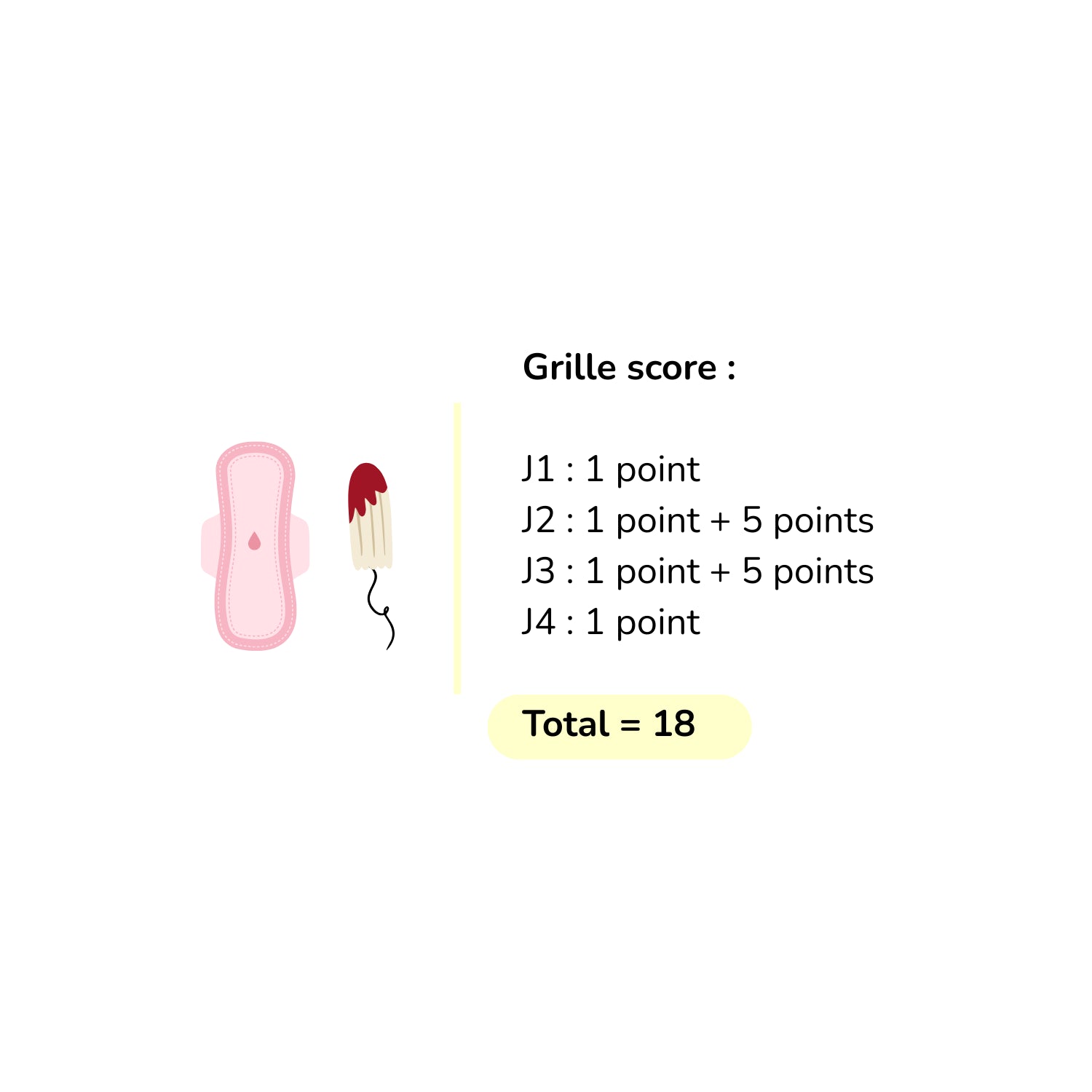
In this first case, Julie only changed her pad twice a day, and her menstrual flow was slightly heavier overnight.
Her cycle is regular and every month is similar.
So she uses light flow period products.
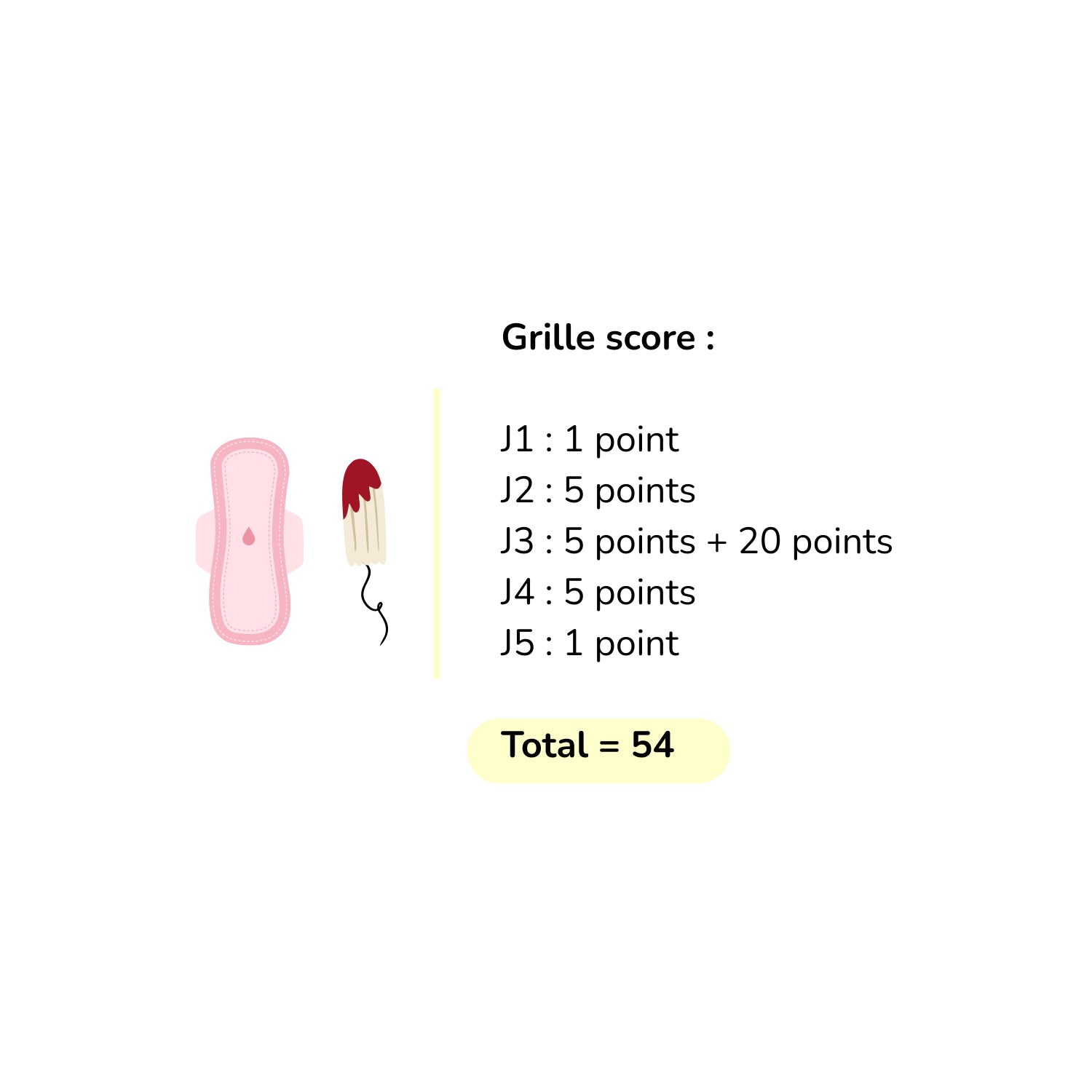
In this second case, Marie changed her pad as often as Julie (twice a day), but her flow was heavier mid-cycle and she had to use a super pad for one night.
She uses higher-absorbency products because her flow gets heavier mid-cycle.
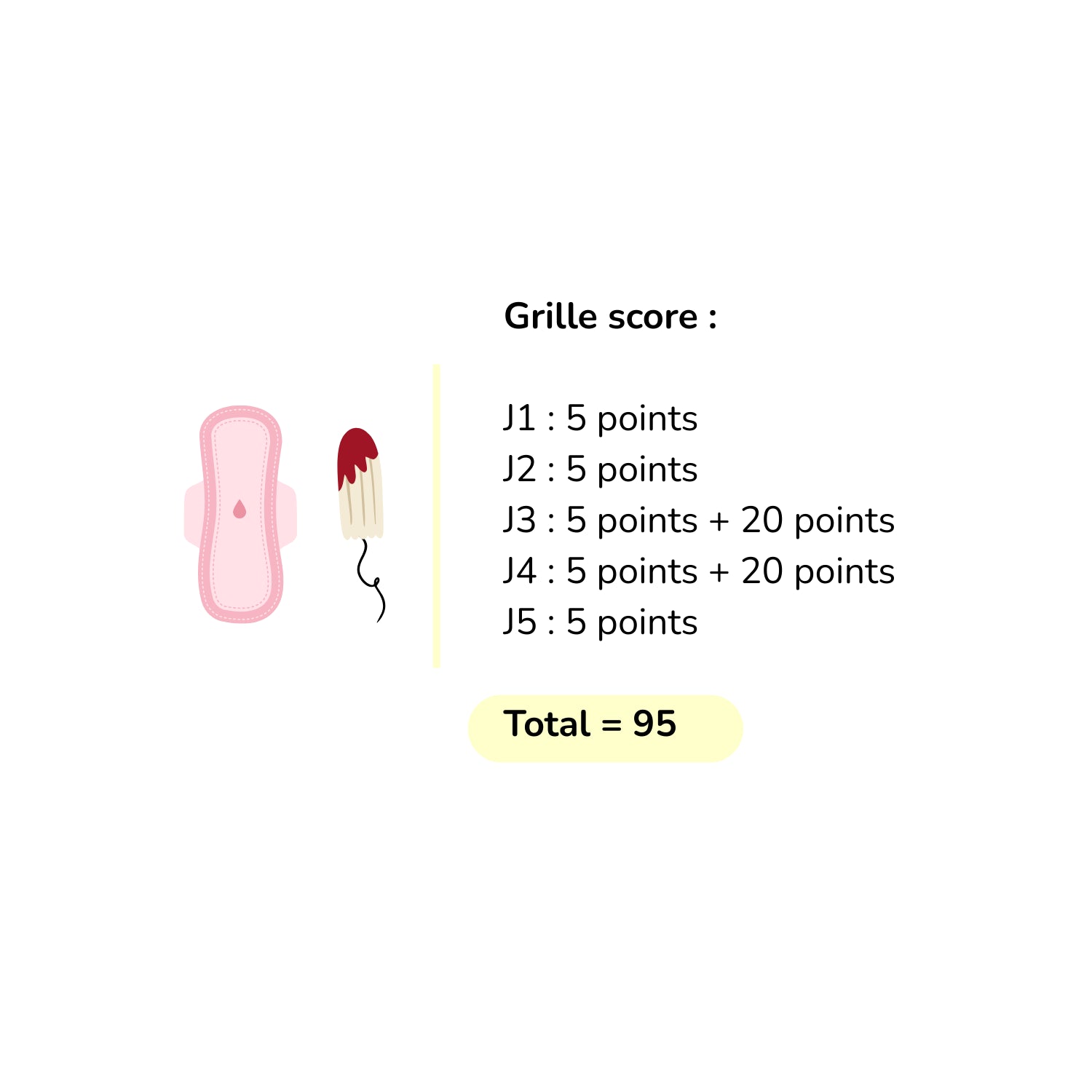
Here, Ambre has a heavy flow, especially toward the end of her cycle. She changes her period product two to three times a day.
She uses super-absorbent products to prevent any risk of leaks.
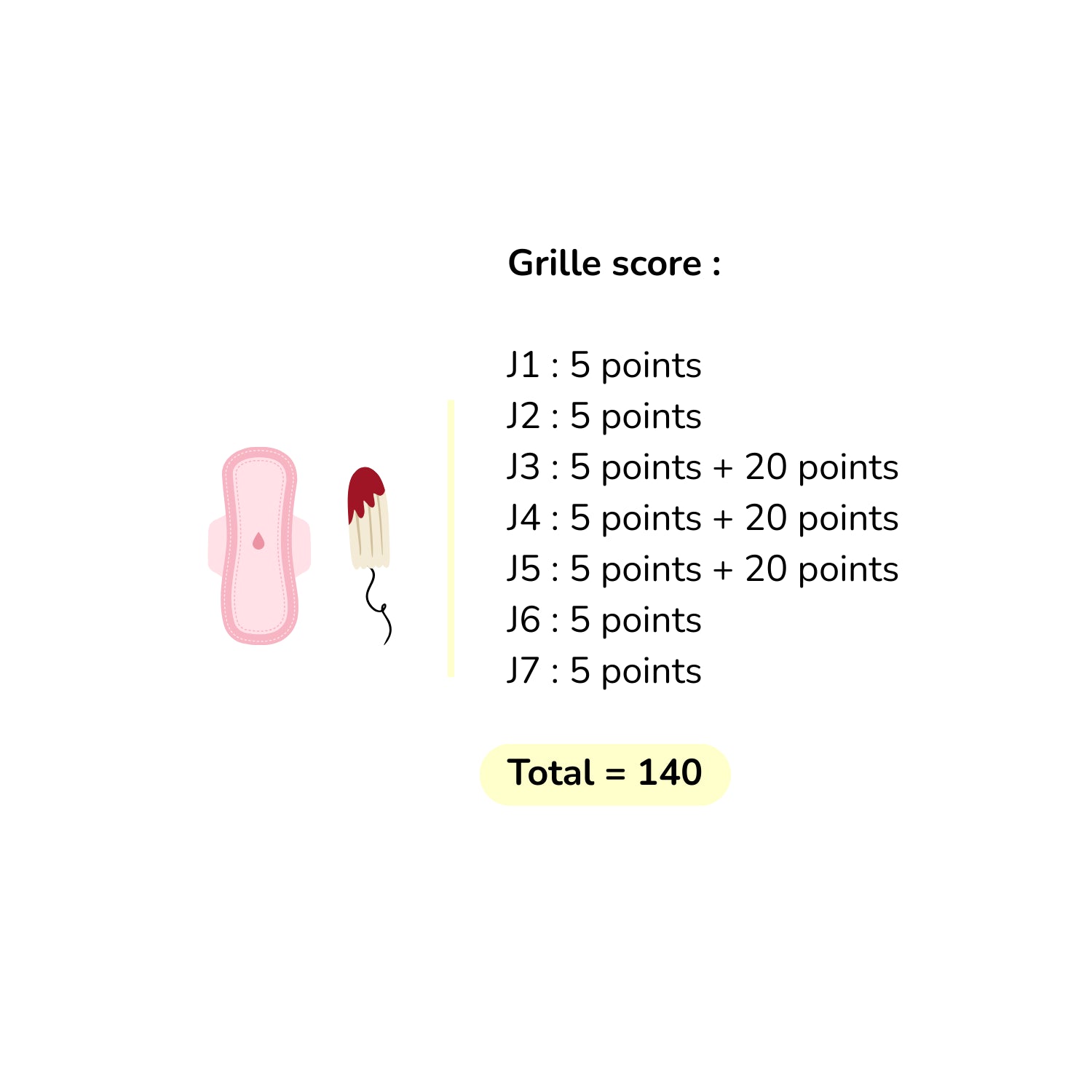
In this last case, Elsa has to change her period product frequently and her periods last especially long.
She uses ultra-absorbent products, but sometimes that isn't enough.
If this sounds like you, you should see a gynecologist for proper follow-up.
Every woman has her own cycle and her own flow, and no two are alike. But with this tool, it will be easier for you to choose the right period products. 😉
If you have menorrhagia or menometrorrhagia, proper medical follow-up is necessary.
Effective absorption
Peace of mind, even in the water
Leakproof technology
Up to 8 hours of peace of mind
Invisible
No diaper effect
No tampons
Say goodbye to disposables


